How computers read, understand and talk back, explained simply for students, parents and school leaders
A beginner-friendly guide to natural language processing for Indian schools: what NLP is in simple words, everyday examples, how it works step by step, NLP and Indian languages, activities by class level, limits, bias and safe chatbot use, and how schools can teach it.
Introduction
When you ask a voice assistant about tomorrow's weather, type a message and see your phone suggest the next word, or translate a Hindi sentence into English, a computer is working with human language. The technology behind this is called natural language processing, or NLP. This guide explains NLP in plain words for students, parents, teachers and principals in India, with simple activities and tips for safe use.
What is NLP, in simple words?
Natural language processing (NLP) is a branch of artificial intelligence that helps computers read, understand and produce human language, both written text and speech. "Natural language" simply means the languages people speak, such as Hindi, English, Marathi or Tamil, as opposed to programming languages like Python.
Human language is messy. The same word can mean different things: "bat" can be a cricket bat or an animal. People also use slang, make typos and mix languages, like Hindi typed in English letters. NLP is about teaching computers to handle all of this well enough to be useful.
Everyday examples of NLP
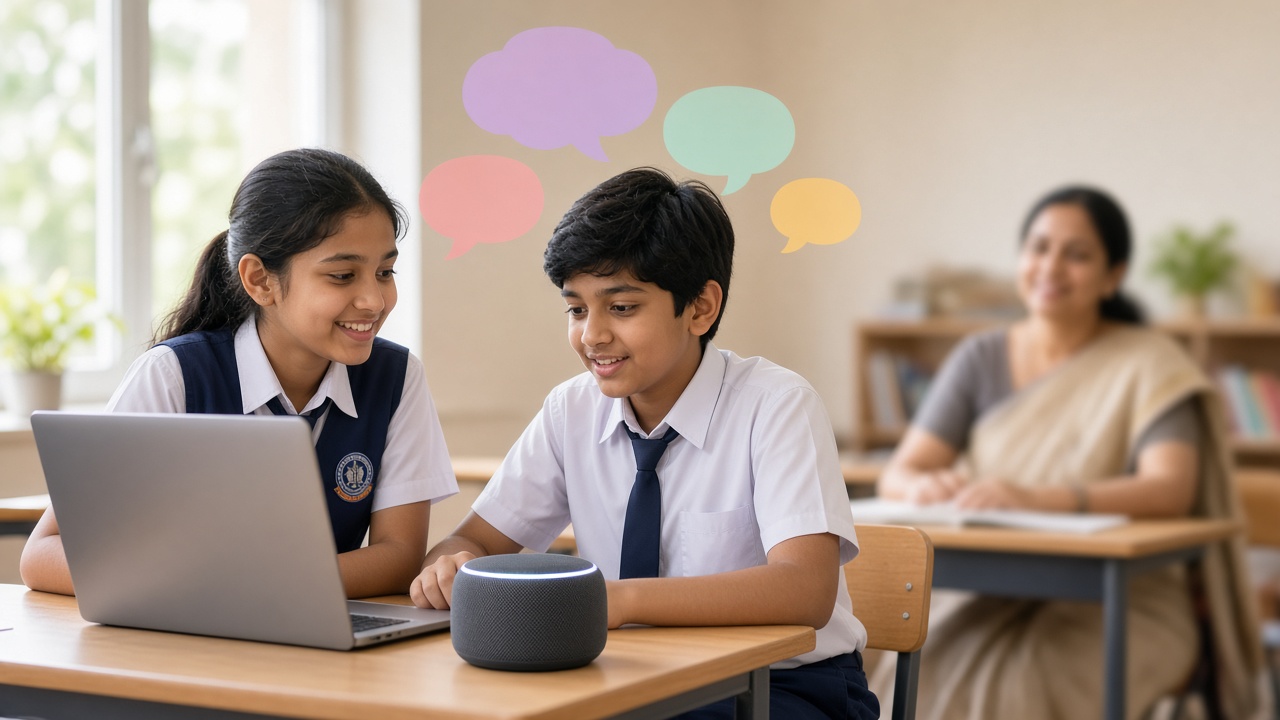
Voice assistants turn your speech into text, work out what you are asking and reply. Autocorrect and predictive text on a phone keyboard fix spelling and suggest the next word, based on patterns in how people usually write.
Translation apps convert text between languages, including many Indian languages, although quality can vary between languages and topics. Website chatbots answer common questions. Email spam filters read incoming messages and move suspicious ones to a spam folder.
How NLP works, step by step
Step 1, collect text: an NLP system starts with many examples of language, such as sentences and messages. Step 2, break it into tokens: the computer splits text into small pieces called tokens, which may be whole words or parts of words. "I love robotics" might become "I", "love" and "robotics".
Step 3, turn tokens into numbers: computers work with numbers, so each token is converted into numbers that capture something about it, such as which words it usually appears near. Step 4, find patterns: using machine learning, the system studies many examples and learns patterns, for example that messages saying "you have won a free prize, click now" are often spam. Learn more at sheepbyte.com/blog/what-is-machine-learning-school-students-guide.
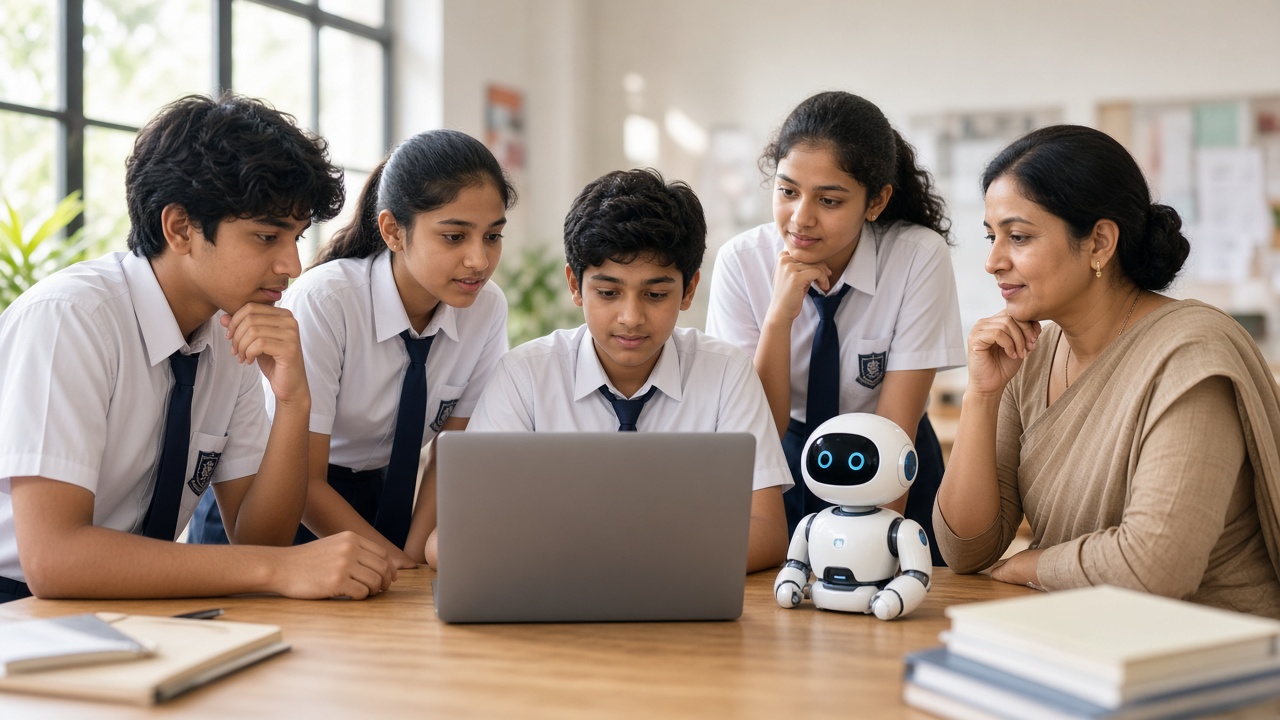
Step 5, use a model: the learned patterns form a model that can label new text, answer questions or translate. Large language models, which power many AI chatbots, are trained on huge amounts of text to predict the next likely token, again and again, to build sentences. That is why they sound fluent without truly understanding like people do. See sheepbyte.com/blog/what-is-generative-ai-explained-for-school-students for more.
NLP and Indian languages
India has a very large number of languages and dialects, many of them written in their own scripts, and many people switch between languages in the same sentence. Some Indian languages have far less digital text available than English, which can make tools less accurate for them.
Researchers, startups and publicly funded initiatives are working on this gap. For example, Bhashini is a Government of India initiative that aims to make digital services available in Indian languages. Its services change over time, so check the official website for current details. For students, building a small tool for their own mother tongue can be a meaningful project.
Simple NLP activities by class level
Classes 3 to 5: Play a sentiment sorting game with cards. Write short sentences such as "I loved the school trip" or "The bus was late again" on cards, and ask students to sort them into happy, sad or neutral piles. Then discuss which words gave the clue. That is what a sentiment classifier does.
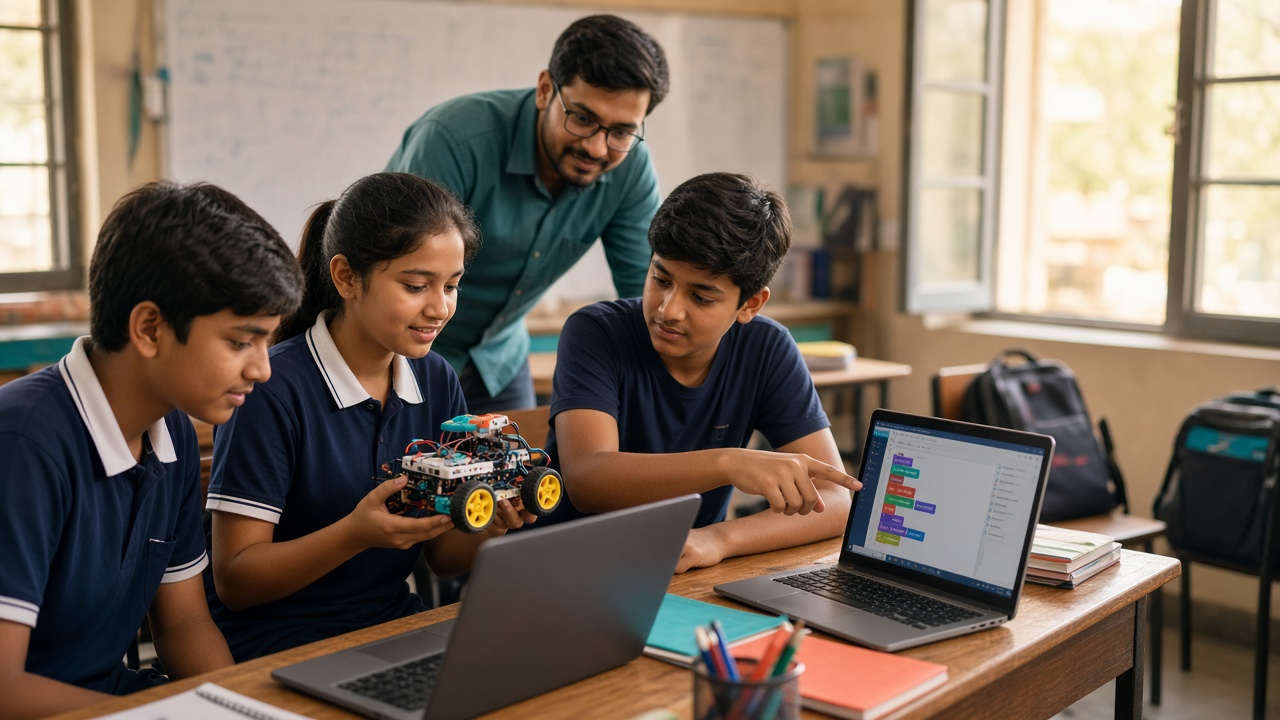
Classes 6 to 8: Use a free, child-friendly tool such as Machine Learning for Kids to train a simple text classifier, for example one that sorts messages into "compliment" or "complaint", and then use it in a Scratch project. Students see that better examples make a better model.
Classes 9 to 12: Write a short Python program that reads a paragraph, splits it into words and counts how often each word appears, using a dictionary or collections.Counter. Then extend it to ignore common words such as "the" and "is".
Limits, bias and safe use of chatbots
NLP tools make mistakes. Translation can miss tone or local meaning, voice assistants may struggle with some accents, and AI chatbots can state wrong facts confidently. Models can also pick up bias, such as stereotypes, from their training text.
Safe-use rules for students: never share personal details such as your full name, address, phone number, school or passwords with a chatbot; check important facts with a textbook, teacher or trusted website; follow your school's rules on using AI for homework; and tell a parent or teacher if a chatbot says something upsetting. Use chatbots as a study helper, not to do your work for you.
How schools can teach NLP
NLP fits naturally into AI clubs, computer classes and even language lessons. Start unplugged, move to no-code tools, then Python for older students. Language teachers can compare machine and human translations with students.
Some school boards, including CBSE, have introduced AI-related content or subjects at certain levels, but curricula change, so check the latest official guidelines for your board. Teachers do not need to be experts; trying each activity once beforehand helps.
Frequently asked questions
Q: Is NLP the same as AI? A: No. NLP is one part of AI. Another part is computer vision, which works with images and video.
Q: Do students need advanced maths to learn NLP? A: Not to start. Unplugged games and no-code tools need no special maths. Deeper study later uses statistics, algebra and programming.
Q: Is ChatGPT an example of NLP? A: Yes. AI chatbots such as ChatGPT use NLP and large language models to understand prompts and generate replies. Many chatbots have minimum age rules, so check their terms first.
Explore AI and NLP with SheepByte
SheepByte is an AI and robotics education company based in Udaipur, Rajasthan. Our AI Learning and Coding Bootcamp programmes introduce students to ideas like machine learning and NLP through hands-on projects, and our Robotics Lab, Drone Technology, Innovation Club and STEM Integration programmes connect AI with real-world building. We run workshops in Jaipur, Delhi and online, and we help schools set up robotics labs.
If you want to bring hands-on AI and language projects to your school or child, write to support@sheepbyte.com or visit sheepbyte.com.