Computational thinking is problem-solving you can practise with paper, chalk and conversation—not only with a laptop
A plain-language guide for Indian parents and teachers on computational thinking—four core ideas, everyday examples, age-wise activities and how it differs from coding.
Introduction
Parents and teachers often hear that schools should teach “computational thinking,” yet it can sound like jargon for coding class. In plain terms, it is a way of breaking problems into clear steps so they are easier to solve. Children practise it when they pack a school bag, plan festival shopping or chase a run in cricket—long before they open a laptop.
This guide is for Indian parents, teachers and principals: what the idea means, how it differs from coding, age-wise activities, how it supports maths and science, and where frameworks such as NEP 2020 encourage related skills.
What computational thinking means in plain language
Computational thinking is a set of problem-solving habits that help people organise information, spot useful patterns and design step-by-step solutions. A child who explains how to make chai—“boil water, add tea, strain, pour”—is already practising algorithmic thinking without writing code.
The goal is not to turn every student into a programmer. It is to help them face unfamiliar problems calmly: split the task, ignore details that do not matter yet, reuse ideas that worked before and write clear steps. Those habits transfer to homework, projects and daily decisions.
The four core ideas, with everyday Indian examples
Decomposition means breaking a big task into smaller parts. Packing a school bag is a classic example: books for today’s timetable, water bottle, tiffin and a raincoat if rain is likely. Planning a school annual day works the same way—invitations, decorations, performances and seating—each handled separately.
Pattern recognition means noticing what repeats. In cricket, batters spot bowling patterns; in cooking, the soak–grind–temper sequence appears across many dishes. In maths, noticing that every even number ends in 0, 2, 4, 6 or 8 is recognising a reusable pattern.
Abstraction means focusing on what matters and setting aside extra detail for now. A class map of the locality shows roads and landmarks, not every shop sign. A Diwali budget may track only categories—lights, sweets, gifts—rather than listing every item on day one.
Algorithms are clear, ordered steps to reach a goal. A morning routine, a recipe for dal, or the route from home to school are all algorithms. So are the steps for long division or a science experiment. Writing them down helps children check whether a step is missing or out of order.
How it differs from coding
Coding is writing instructions in a language a computer understands. Computational thinking is the planning and problem-solving that comes before and around that writing. You can practise it with paper, cards, chalk and conversation—often called “unplugged” activities—without any device.
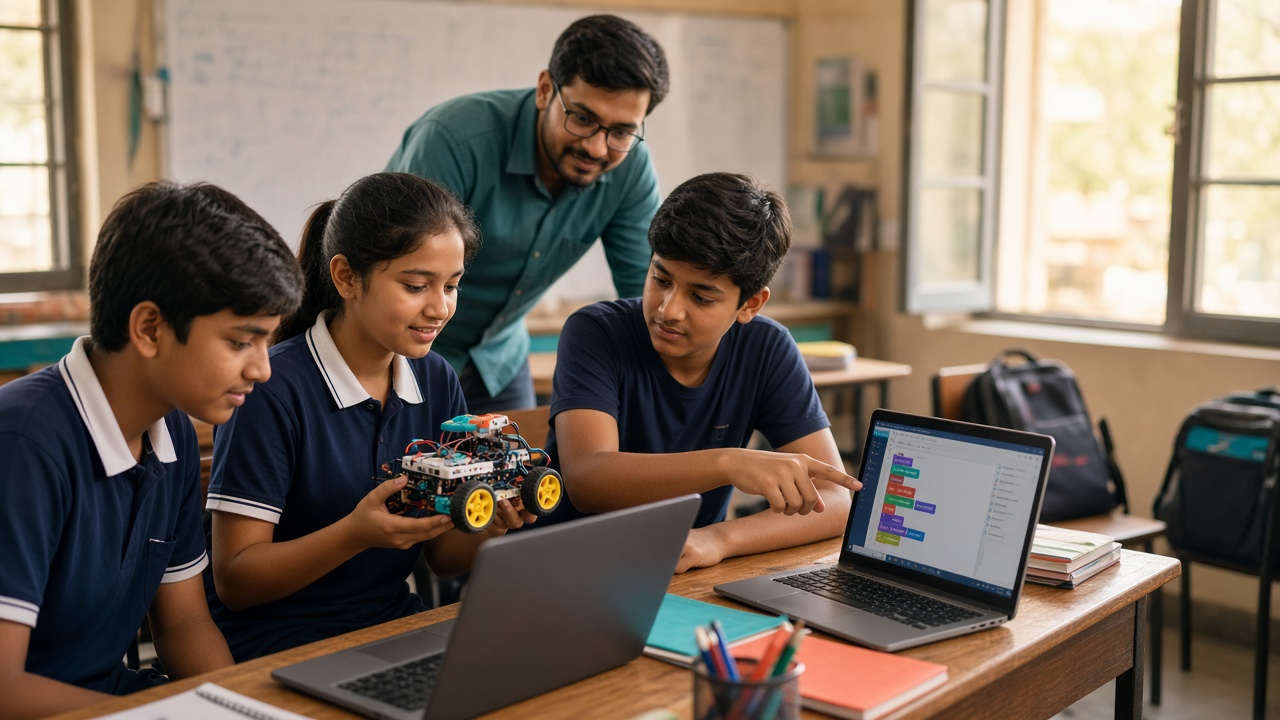
Coding applies those habits powerfully, because a program forces steps to be precise and lets students test and fix mistakes quickly. Scratch and simple classroom robots make that engaging. Starting with unplugged games is not “behind”; it builds the same foundation many coding lessons assume.
Age-wise activities at home and in class
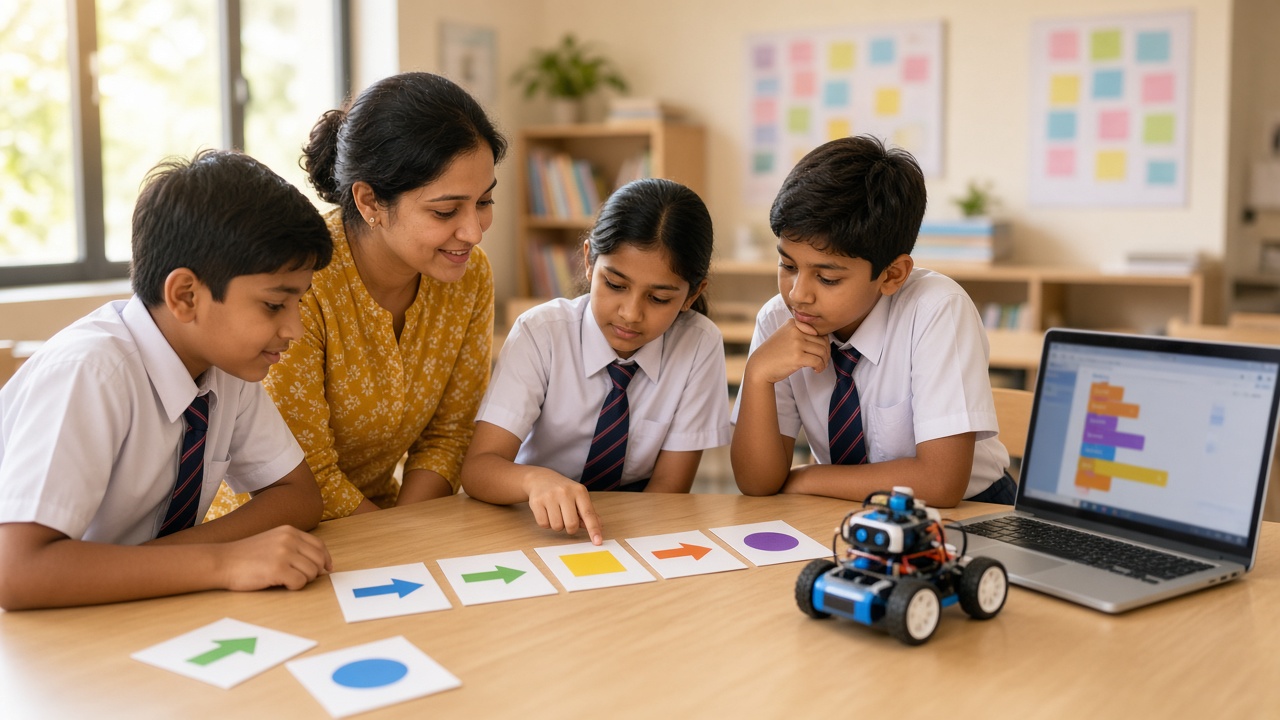
Ages 5–8 (Classes 1–3). At home, ask children to give directions for making a sandwich or setting the table, then follow their instructions exactly so they see what happens when a step is unclear. In class, use arrow-card treasure hunts or sort objects by colour and size while naming the rule.
Ages 9–12 (Classes 4–7). At home, plan a weekend outing: list tasks, order them and decide what can happen in parallel. In class, introduce Scratch for shapes, stories or quizzes, and pair that with a floor robot or basic wheeled kit.
Ages 13–16 (Classes 8–10). Ask students to break a science project or maths word problem into sub-tasks on paper before touching a device. Deepen Scratch or move toward text-based coding where capacity allows, and try robotics challenges such as line-following. Keep reflection central: ask them to explain their plan, what failed and what they changed.
How it helps in maths, science and exams
In maths, decomposition turns a multi-step word problem into smaller calculations. Pattern recognition supports number series and geometry. Abstraction helps students decide which information in a long question is relevant. Clear algorithms mirror the step-by-step working teachers expect in answer sheets.
In science, students who plan an experiment as an ordered procedure—aim, materials, steps, observation, conclusion—are practising algorithmic thinking. Spotting patterns in results and ignoring noise in a messy trial are forms of pattern recognition and abstraction.
For exams, computational thinking does not guarantee higher marks on its own. It can help students stay organised under time pressure: read carefully, split the question, ignore distractors and write steps an examiner can follow.
Frameworks such as NEP 2020 encourage computational thinking and coding from the middle stage onward. Schools can respond with regular unplugged activities, Scratch and simple robotics—without waiting for a full lab renovation.
Common mistakes to avoid
One mistake is treating computational thinking as another name for coding class, so children without devices feel left out. Unplugged practice should stay in the mix. Another is rushing into kits before students can explain a plan in their own words; hardware then becomes a distraction.
Parents sometimes assume only computer teachers can help. Everyday planning, cooking and games already offer practice if adults ask children to explain steps. Schools may also run a one-off workshop and then stop; short, repeated activities beat a single showcase. Avoid exaggerated claims that this skill alone will transform every subject score—pair it with solid teaching of the syllabus.
Frequently asked questions
Q: Do children need a laptop to learn computational thinking? A: No. Many strong activities use paper, cards, chalk, conversation and everyday routines. A laptop becomes useful later for Scratch, coding and robotics, but it is not the starting point.
Q: Is this only for students who want a tech career? A: No. Breaking problems down, spotting patterns, focusing on what matters and writing clear steps support maths, science, projects and everyday decisions across many paths.
Q: How is this different from “logical thinking” already taught in school? A: There is overlap. Computational thinking names a few specific habits and often pairs them with testing and fixing a plan, which coding and robotics make visible. It complements, rather than replaces, the logical reasoning schools already teach.
Build computational thinking with SheepByte
SheepByte is an AI and robotics education company based in Udaipur, Rajasthan. Our programs—AI Learning, Coding Bootcamp, Drone Technology, Innovation Club, Robotics Lab and STEM Integration—help schools and students practise problem-solving through coding, robotics and hands-on projects. We run workshops in Jaipur, Delhi and online, and help schools set up robotics labs.
To explore programs for your child or school, email support@sheepbyte.com or visit sheepbyte.com.