Safety-first steps for principals, STEM teachers and parents ready to bring drones into school learning
A safe, practical guide for Indian schools to start a drone club: age bands, simulators and nano drones, safety rules, regulations to check, roles, a sample term plan and ways to show student outcomes.
Introduction
A drone club can turn a spare hall period into one of the most exciting STEM activities in school. Students see physics, maths and coding come alive when a small aircraft lifts off, and they practise teamwork every time they plan a flight. This guide is for principals, STEM teachers and parents in India who want a safe, practical way to start — without waiting for a large budget or a full outdoor airfield.
Why drones belong in school learning
Drones are flying computers. Flying one safely means understanding lift, thrust and balance, reading numbers on a controller, following a sequence of steps, and communicating clearly with teammates.
Physics appears in how rotors create lift and how battery weight affects flight time. Maths shows up in estimating distance, speed and simple flight paths. Coding enters when older students use block or text programs for waypoints or simple manoeuvres. Soft skills matter just as much: students take turns as pilot and spotter, write checklists and learn to stop a flight when something feels unsafe.
What students can learn by age band
Ages 8 to 11: Focus on curiosity and control. Children can practise with flight simulators, learn the names of drone parts, and fly tiny indoor nano drones under close adult supervision. Keep sessions short and emphasise "eyes on the drone" and "land when unsure".
Ages 12 to 14: Add structure. Students can run pre-flight checks, fly simple indoor circuits, keep a flight log and try basic photography in a controlled space. They can also begin lightweight build kits that teach motors, frames and battery care.
Ages 15 to 17: Link the club to projects. Older students can design obstacle courses, explore mapping or inspection ideas on paper, write simple flight plans and mentor juniors. Supervised outdoor practice should follow only after strong indoor habits and school approval are in place.
Start small: simulators, nano drones and kits
You do not need a fleet on day one. Many school clubs begin with three layers.
Simulators first. Desktop or app-based flight simulators let students crash virtual drones without cost or injury, and teach orientation, throttle control and emergency landing.
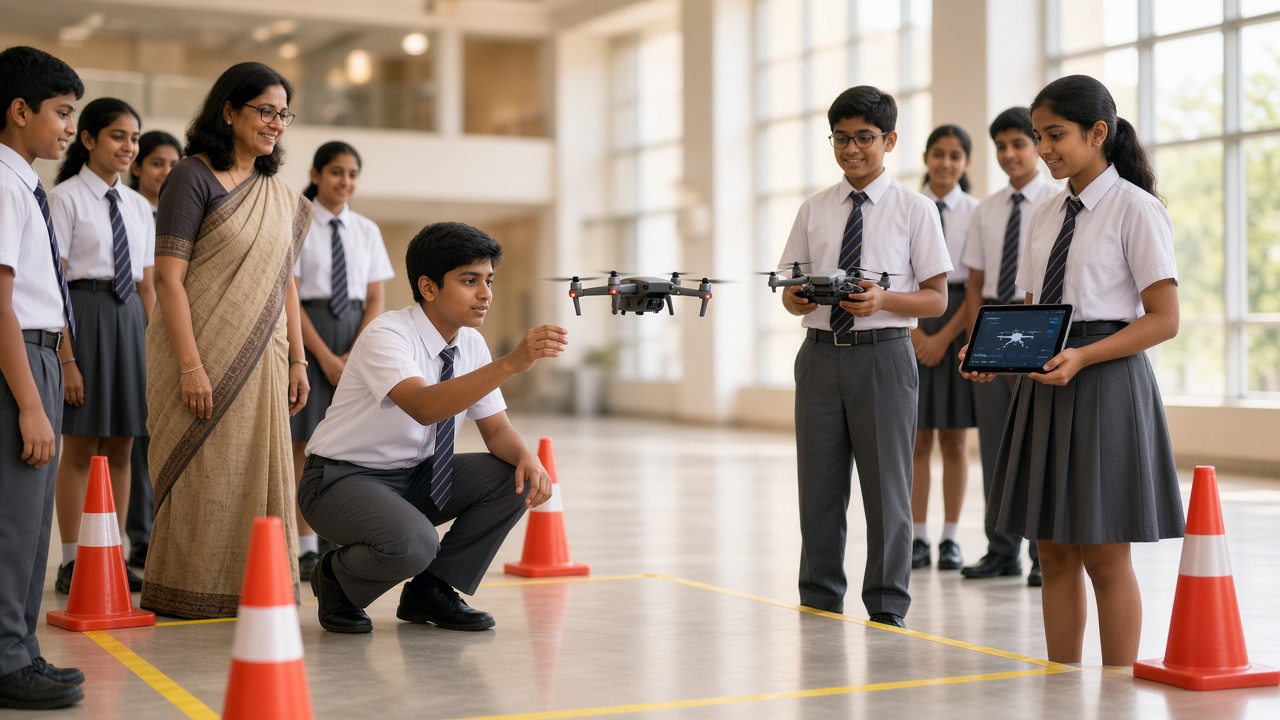
Mini and nano indoor drones next. These small models suit halls and classrooms. Propeller guards, low height and soft floors reduce risk while students learn spatial awareness.
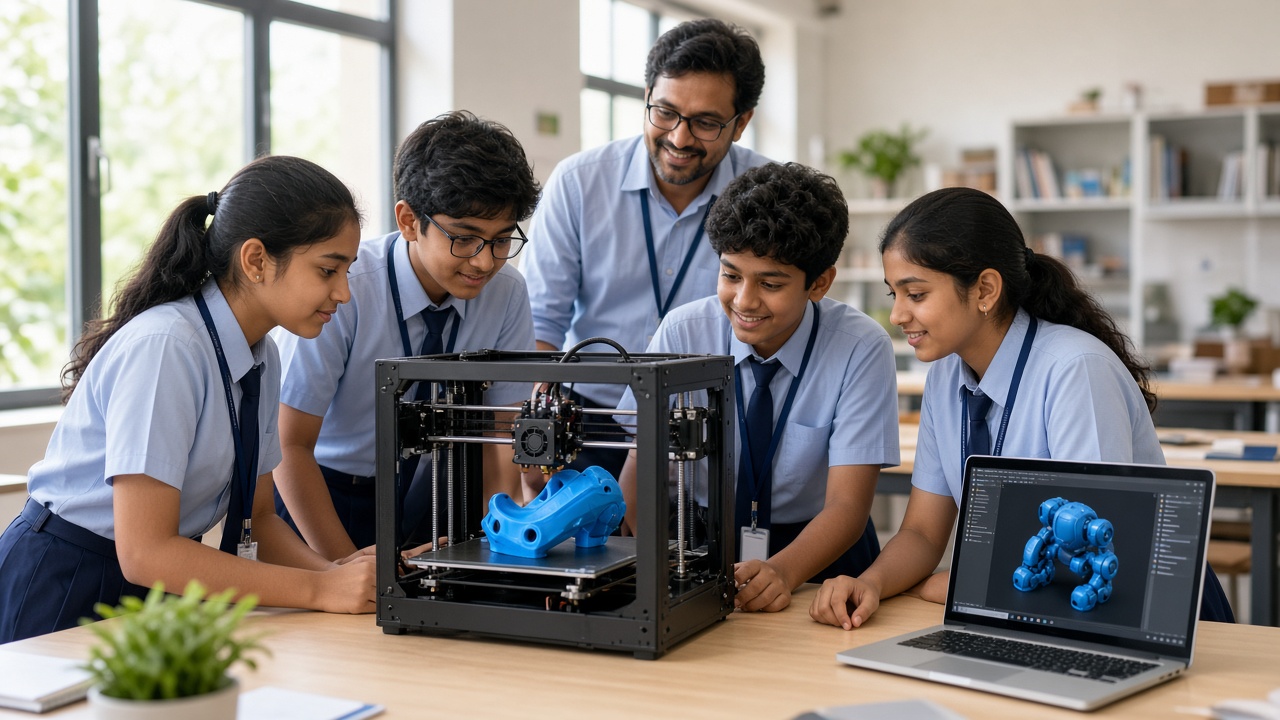
Build kits later. Educational kits help students assemble frames, connect motors and see how electronics and code work together. Repairs and spare parts become part of the learning.
Safety rules and an indoor practice space
Write safety rules before the first flight: adult supervision at every session; one pilot and one spotter per drone; no flying over people; propellers off when people are near the aircraft; batteries charged and stored as the manufacturer recommends; and an immediate "land now" signal everyone recognises.
Choose a clear indoor space — a multipurpose hall, empty classroom or covered corridor — away from fans, hanging wires and fragile displays. Mark a take-off and landing pad with tape. Keep spectators behind a line. For younger groups, fly only one drone at a time until habits are solid.
A careful note on drone regulations in India
India's civil drone framework is set by the Ministry of Civil Aviation and the Directorate General of Civil Aviation (DGCA), including the Drone Rules, 2021 and later updates. Requirements can differ by drone category, weight, location and purpose, and they can change. Schools should check current official guidance on the Digital Sky platform before any outdoor flying, especially near airports, helipads or notified restricted zones.
Treat outdoor flights as a later stage that needs school leadership approval and a fresh check of official rules. Nano and other very small drones often face lighter requirements in many situations, but do not assume; always verify the latest guidance for your specific aircraft and site. When in doubt, keep practice indoors and seek advice from a qualified instructor or official sources.
Club roles and a simple session structure
Useful roles include a faculty mentor, a student captain, equipment and battery leads, a safety officer and a documentation lead. A 45- to 60-minute session might look like this: five minutes for attendance and safety reminder; ten minutes for theory or simulator review; twenty to twenty-five minutes of supervised flying or building; ten minutes for logging what went well; and a short pack-up. Rotate roles so every student practises both flying and supporting.
A sample one-term plan
Weeks 1 to 2: Orientation, safety rules, parts of a drone, simulator practice.
Weeks 3 to 5: Indoor nano-drone hovering, gentle squares and figure-eights, spotting skills.
Weeks 6 to 8: Pre-flight checklists, battery care, simple obstacle courses, beginner kits if available.
Weeks 9 to 11: Small team projects — a filmed indoor hall tour, a measured flight-path challenge, or a poster on lift and drag.
Week 12: Mini exhibition for parents and classmates, with demos that stay indoors unless outdoor clearance is confirmed.
A fortnightly club still works if sessions are consistent and safety habits stay firm.
Thinking about budget without overspending
Costs vary by brand, city and how many students share equipment. Plan in stages: start with simulators and shared controllers; add a few guarded nano drones; then consider kits and spare batteries when the club has a stable roster. Ask whether existing laptops can run simulators and whether the hall is free after school. Shared kits across classes stretch value further than one drone per student. Record damage, repairs and battery life so the next purchase is based on evidence.
Showing outcomes to the school community
Capture outcomes that are easy to show: flight logs, student-written safety checklists, short project videos, science-fair posters that link drones to physics, and peer mentoring notes. An end-of-term exhibition in the school lobby makes learning visible and helps justify the next stage of equipment.
How SheepByte's Drone Technology program can help
SheepByte is an AI and robotics education company based in Udaipur, Rajasthan. Our Drone Technology program helps schools introduce drones safely, with age-appropriate activities that connect to Coding Bootcamp, Robotics Lab, AI Learning, Innovation Club and STEM Integration. We support workshops in Jaipur, Delhi and online, and we work with schools that want a structured path from first hover to student projects.
If you are planning a drone club or want mentor-led sessions for your students, write to support@sheepbyte.com or visit sheepbyte.com.