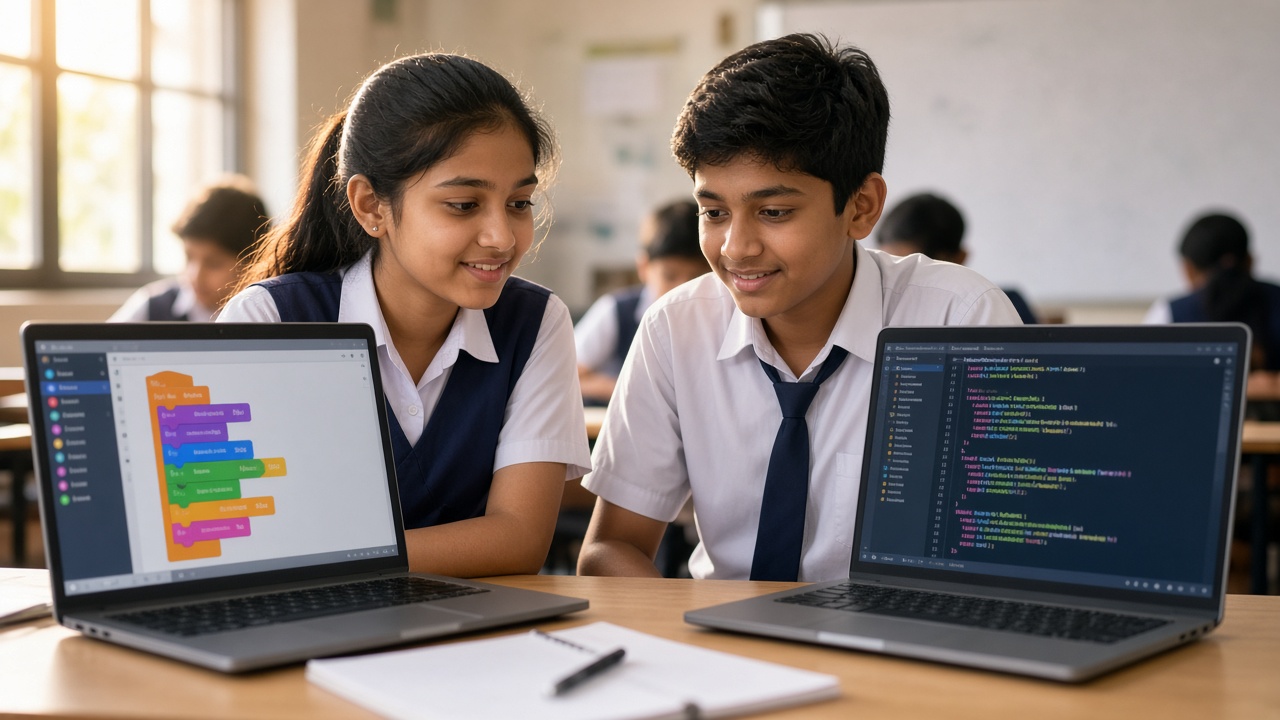
Both are valid—choose by readiness, not by which sounds more advanced
A practical guide for Indian parents and teachers on whether kids should start with Scratch or Python, with age guidance, comparison points, and a sensible Scratch-to-Python path.
Introduction
Parents across India often hear two names when they ask what coding language their child should learn first: Scratch and Python. Both are widely used in schools and after-school programmes, and both build real problem-solving skills. The better choice depends less on which tool sounds "more advanced" and more on age, reading comfort, typing readiness, and goals—games and stories now, or a path toward data, AI, and robotics later.
This guide compares Scratch and Python for Indian parents and teachers, with practical age guidance, a side-by-side view, a suggested learning path, and FAQs. Adapt the advice to your child's pace and your school's timetable.
What Scratch is
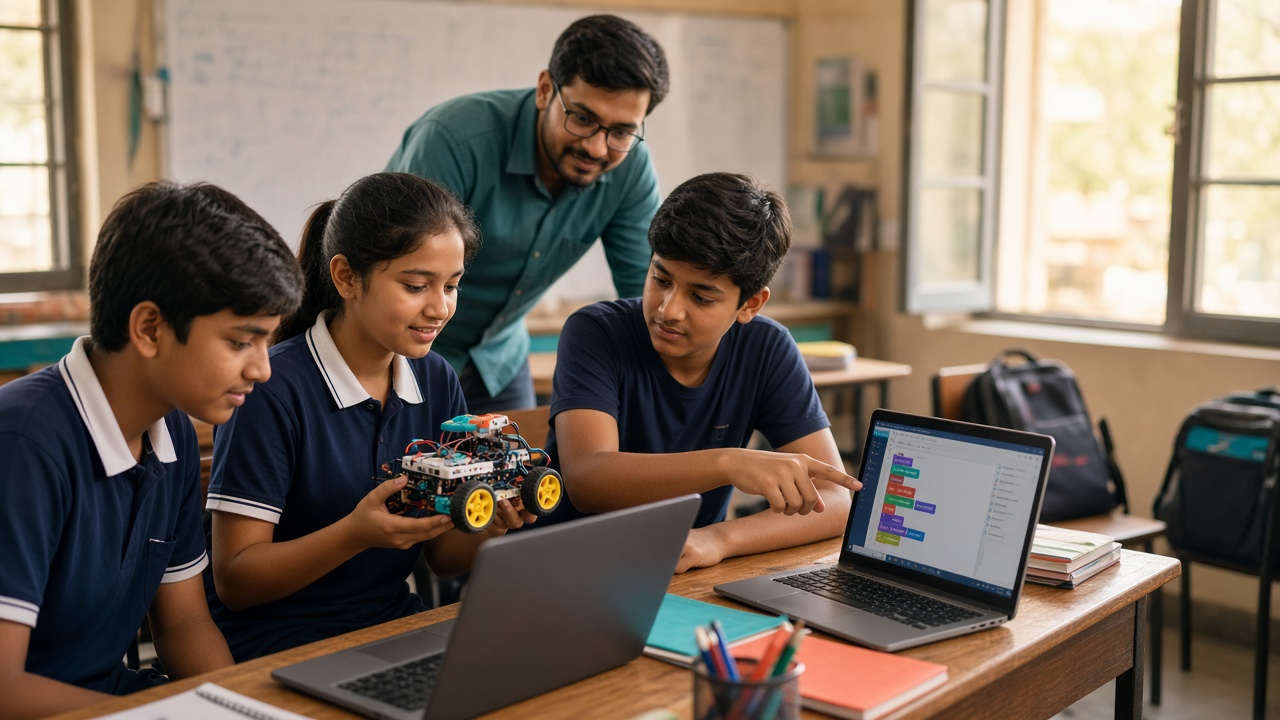
Scratch is a block-based coding environment for beginners. Learners snap colourful blocks together—such as "when green flag clicked," "move 10 steps," or "if touching edge, bounce"—instead of typing every command. That design lowers spelling and punctuation barriers so children can focus on sequencing, loops, conditions, and events.
Scratch shines for creativity. Students make interactive stories, simple games, animations, and quizzes. They can explain their logic aloud—useful for a school demo or Innovation Club showcase. In many Indian computer labs, Scratch runs in a browser, so schools need little software setup. Mentors coach thinking rather than hunting for missing commas.
Scratch is not "toy coding" when projects have clear goals. A well-mentored project still asks students to plan, debug, and iterate. It is an excellent first step for younger learners and anyone who freezes at a blank text editor.
What Python is
Python is a text-based language used widely in education, data work, and introductory AI pathways. Learners type statements and short scripts that calculate, sort lists, or read simple files. Syntax matters—indentation, colons, and spelling must be correct—which builds discipline but can frustrate early typists.
Python's strength is a clear path beyond games: data exploration, small automations, and—when ready—age-appropriate AI Learning with mentor support. Many Robotics Lab and STEM Integration programmes eventually use Python (or Python-like tools) alongside hardware, though beginners often start with blocks first. Once the basics click, learners can grow for years without switching languages.
Age and readiness—not a single magic year
There is no universal "correct age." As a gentle rule of thumb—not hard policy—many younger primary students thrive with Scratch because blocks reduce typing load. Middle-school students who read confidently, type reasonably well, and enjoy puzzles often handle beginner Python after some Scratch experience. Older students can start Python directly if sessions stay project-based and not lecture-heavy.
Curriculum expectations for coding in Indian schools can differ by board, school, and year. Treat Scratch and Python as enrichment that supports STEM goals, not a race to match any single policy document. If typing still blocks progress, stay with Scratch longer. If the child asks how programmes work with data, introduce Python carefully.
Scratch vs Python side by side
Syntax. Scratch uses drag-and-drop blocks; Python uses typed text. Blocks reduce early frustration; text builds precision for later work. Debugging. In Scratch, broken logic often shows as a sprite doing the wrong thing—easy to discuss. In Python, error messages must be learned. Both teach debugging; Scratch usually feels friendlier at first.
Creativity. Scratch is outstanding for games, stories, and visual demos. Python can do graphics too, but early weeks usually focus on logic and small text programmes. Path to robotics and AI. Scratch builds computational thinking that transfers and can pair with some educational kits. Python maps more directly onto scripting, data, and many AI Learning pathways. Neither replaces hands-on robotics; both can sit beside a Coding Bootcamp or Robotics Lab track.
School lab fit. Scratch needs little beyond a browser. Python needs an editor or notebook and a bit more mentor time for setup. Shared lab machines work for both if teachers keep a simple, locked configuration and short regular sessions.
A suggested learning path
For most school-age beginners in India, Scratch first, then a bridge into Python, works better than an abrupt jump. Spend enough weeks for learners to finish a few projects they can explain—a quiz, maze, or choice-based story. Then introduce Python with tiny scripts that reuse familiar ideas (loops, conditions, variables) so syntax feels like a translation, not a restart.
Some families run Scratch alongside simple robotics or unplugged design challenges. That mix keeps screen time purposeful. SheepByte-style Coding Bootcamp and Innovation Club sessions often blend block coding, early text coding, and project demos so students do not stall in tutorial-watching mode. Strong readers in higher classes can start with Python if mentors keep projects small and celebrate every working script.
Common mistakes to avoid
Jumping to Python the week a child first hears "coding." Treating Scratch as fluff and skipping project goals. Only watching demos or tutorials without building personal versions. Comparing siblings on language choice instead of curiosity. Ignoring typing practice before text coding. Expecting overnight "AI readiness" because a brochure mentions Python. Buying paid tools before a weekly practice habit exists. Start where the child can succeed each week, then stretch.
Frequently asked questions
Q: Should my child skip Scratch and go straight to Python? A: Sometimes, if they are older, type well, and stay motivated through errors. Many children still benefit from Scratch first—or a short bridge—so logic feels playful before syntax gets strict. Ask a mentor to assess readiness with a short trial project.
Q: Is Scratch useful if my school already teaches Python? A: Yes. Scratch remains excellent for storytelling, game design, and teaching ideas visually. It also helps mixed-ability classes where not every student thrives in a text editor yet.
Q: How long should we stay with Scratch before switching? A: There is no fixed calendar. A practical signal is when the child finishes several Scratch projects independently and can explain loops and conditions in their own words. Then begin Python with short, guided scripts.
Q: Can Scratch or Python help with robotics later? A: Both support computational thinking used in robotics. Scratch may connect to certain educational kits; Python often appears in more advanced scripting and data-related STEM work. Pair either language with hands-on building, not screen work alone.
Learn with SheepByte
SheepByte is an AI and robotics education company based in Udaipur, Rajasthan. Our Coding Bootcamp, AI Learning, Innovation Club, Robotics Lab, and STEM Integration programmes help students move from first blocks to real projects with mentor support. We run workshops in Jaipur, Delhi, and online, and we partner with schools on structured coding pathways.
If you want guidance on whether Scratch, Python, or a blended path fits your child or campus, email support@sheepbyte.com or visit sheepbyte.com.