Both can work—choose by attention, hardware needs, and the routine you can sustain
A practical guide for Indian parents on whether online or offline coding and robotics classes work better, with comparison points, hybrid options, and a simple checklist.
Introduction
Parents across India face a familiar choice when they want their child to learn coding or robotics: join an online class from home, or travel to an offline centre or school lab. Both formats can work well. The better fit depends on age, attention habits, hardware needs, travel time, and weekly accountability.
This guide compares online and offline coding classes for Indian parents—and lightly for school principals—so you can choose with clear criteria. Adapt the advice to your city, timetable, and the child’s learning style.
What online coding classes look like
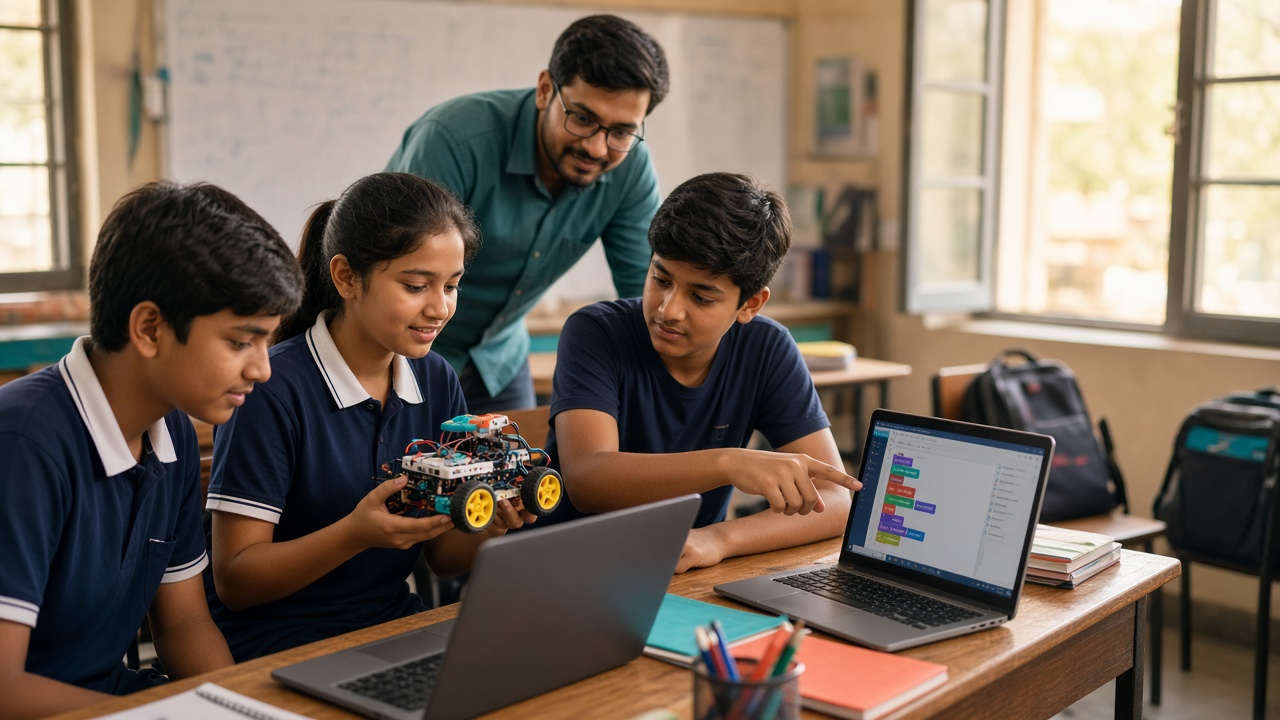
Online coding classes usually run on video platforms. A mentor shares a screen, students follow along on a laptop or tablet, and work happens in a browser or simple editor. Sessions may be one-to-one or in small groups. Many programmes send short homework and ask for a finished project at the end of a module.
Online shines when travel is hard, school days already feel packed, or a specialist mentor is available only remotely. Children who type reasonably well and stay focused with a parent nearby often thrive. For software-first topics—Scratch, beginner Python, or age-appropriate AI Learning demos—online can feel as rich as an in-person room if mentors keep sessions interactive and project-based.
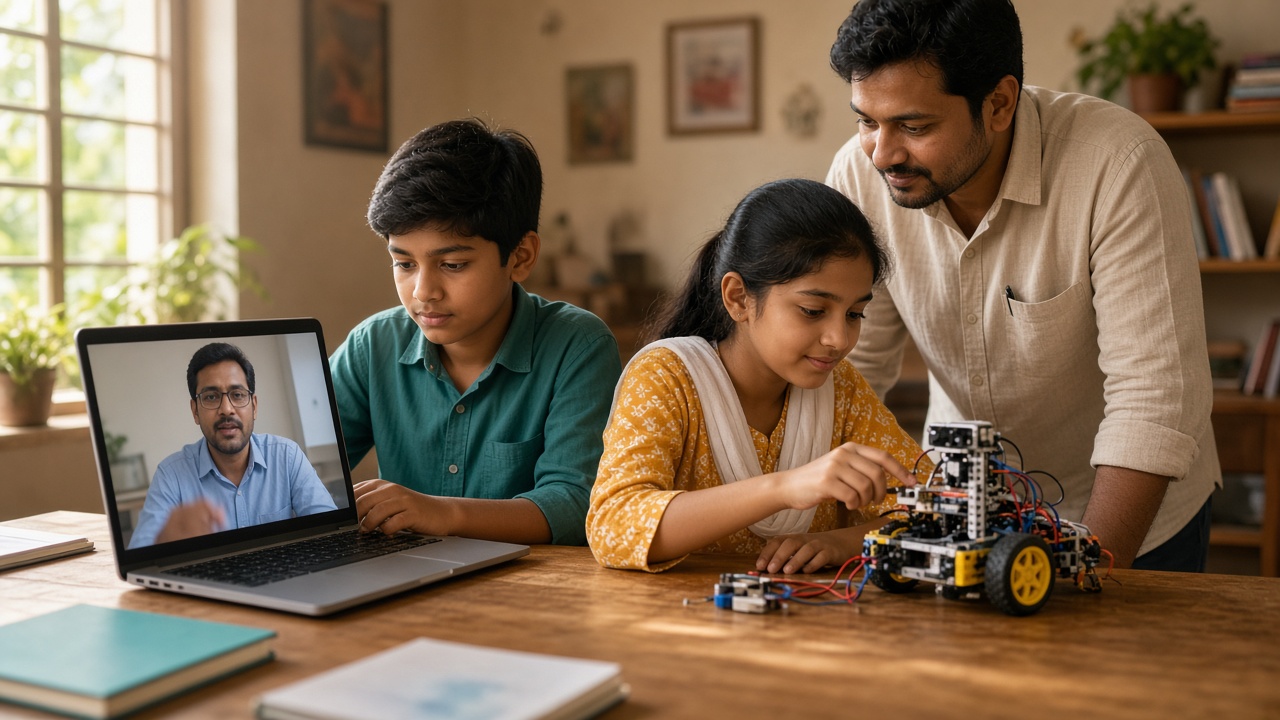
Limits appear quickly with robotics kits, soldering, drones, or shared lab tools. Mentors can demonstrate on camera, but tactile practice needs kits at home and help with setup. Internet stability and a quiet corner also matter more than many families expect.
What offline coding classes look like
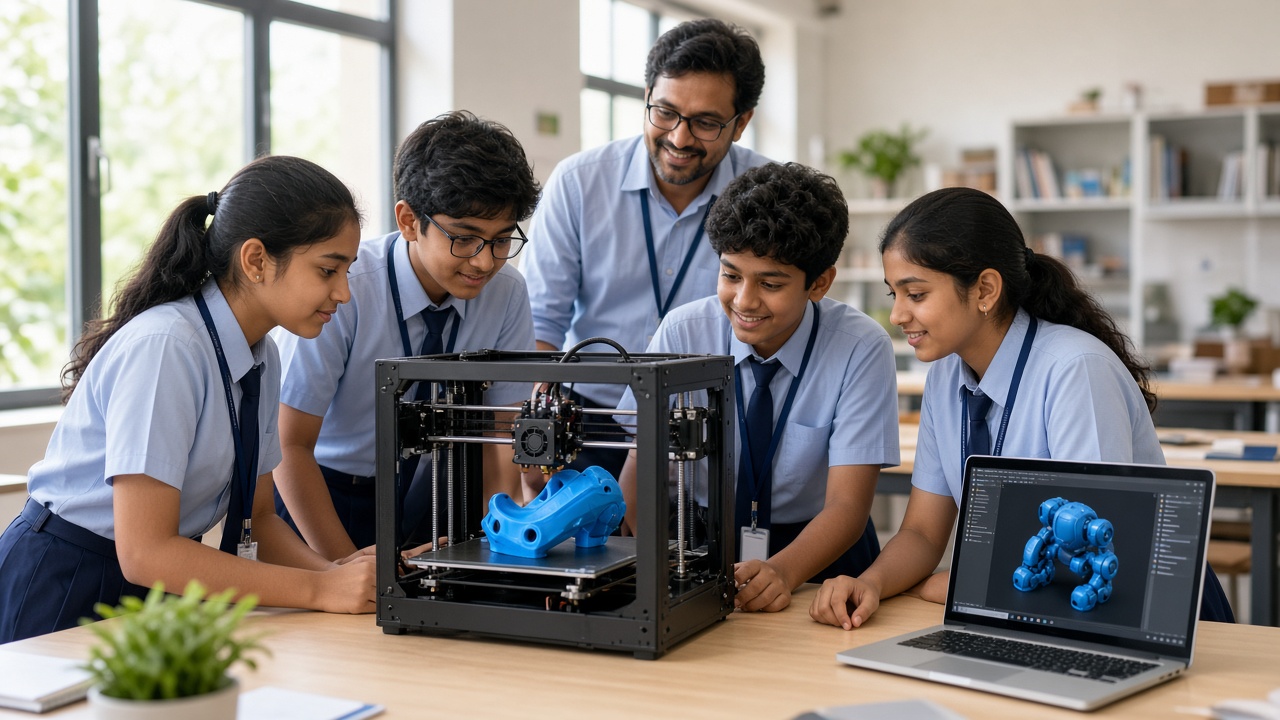
Offline classes happen in a centre, school computer lab, or workshop space. Students sit with peers, share kits, and get immediate help when a circuit fails or a programme throws an error. Mentors can adjust difficulty on the spot and run short demos everyone can try with real hardware.
Offline is especially strong for Robotics Lab work, Innovation Club builds, and peer energy—pair debugging, mini competitions, and show-and-tell. Younger children who lose focus alone often settle better with a mentor in the room. Principals may prefer offline sessions that use existing labs without requiring every family to buy equipment.
Trade-offs include travel, fixed slots, and sometimes larger batches. A long commute after school can cancel the benefit of an excellent mentor. A crowded offline room with little individual feedback is no better than a weak online session.
Online vs offline side by side
Interaction. Online depends on chat, raised hands, and screen share. Offline allows quick shoulder-side coaching. Both can be interactive if mentors design for it; neither is automatic.
Hardware and robotics. Offline usually wins for kits, sensors, and shared Robotics Lab gear. Online covers coding logic well; hardware pathways need home kits or occasional in-person workshops.
Schedule and travel. Online saves commute time and fits busy calendars. Offline locks a routine many families find easier to honour—once you leave the house, the class happens.
Accountability. Offline peer presence often reduces “I’ll do it later” drift. Online works when parents protect a quiet slot, keep the camera on when asked, and review weekly projects.
Cost factors. Fees vary by city, batch size, and whether kits are included. Compare total cost of time, travel, kits, and mentor attention—not only the monthly fee. Ask each provider for a clear breakdown rather than vague averages.
Peer energy. Offline groups can spark collaboration and healthy rivalry. Online groups can too with shared demos and breakout tasks, but silence is easier to hide behind a muted mic.
Hybrid options worth considering
Many families do not need an all-or-nothing choice. A common pattern is online coding weeks for language and logic, plus monthly offline workshops for robotics, drones, or team projects. Schools may run STEM Integration in the lab and invite partners for holiday intensives. SheepByte-style pathways often combine Coding Bootcamp online options with in-person workshops in Jaipur, Delhi, and similar cities, so students get both screen skills and hands-on practice.
Hybrid works best when one programme owns the learning path—so online and offline sessions build on the same projects rather than restarting each time.
How to choose: a practical checklist
Ask before you enrol. Does my child need physical kits this term, or is software enough? Can we protect a quiet, reliable slot at home? Is travel after school realistic? Does the child stay focused alone, or need peers in the room? Will a mentor review personal projects, not only live demos? Are batch sizes clear, and can we trial one session? For schools: can sessions use our existing lab, and will teachers get a simple handover?
Favour the format the child can sustain for a full term. Consistency beats a glamorous brochure.
Common mistakes to avoid
Choosing online only because it seems “modern,” then discovering the child needs kits. Choosing offline only because a neighbour did, despite a draining commute. Skipping a trial class. Ignoring internet quality until the first session freezes. Expecting robotics mastery from video alone. Leaving younger children unsupervised online. Comparing fees without comparing mentor time and project outcomes. Signing long packages before a four-week habit exists. Start short, watch whether the child can explain what they built, then extend.
Frequently asked questions
Q: Is online coding as good as offline for beginners? A: It can be, for software topics and motivated learners with home support. For early robotics and very young children, offline or hybrid usually feels safer and clearer.
Q: What if we live far from a good centre? A: Online or hybrid is often the practical path. Look for programmes that recommend simple kits and schedule occasional city workshops when you can travel.
Q: Can schools mix both formats? A: Yes. Many campuses run lab periods offline and assign short online practice, or bring partners for workshops while keeping weekly coding in the computer room. Boards and timetables differ, so treat this as enrichment planning, not a single national rule.
Q: How do we know the class is working? A: Ask the child to show a small project every few weeks and explain one bug they fixed. Progress you can see beats certificates you cannot verify.
Learn with SheepByte
SheepByte is an AI and robotics education company based in Udaipur, Rajasthan. Our Coding Bootcamp, Robotics Lab, AI Learning, Innovation Club, and STEM Integration programmes help students learn through projects—online, on campus, and in workshops. We run sessions in Jaipur, Delhi, and online, and we partner with schools that want structured coding and robotics pathways.
If you are deciding between online, offline, or hybrid for your child or campus, email support@sheepbyte.com or visit sheepbyte.com.