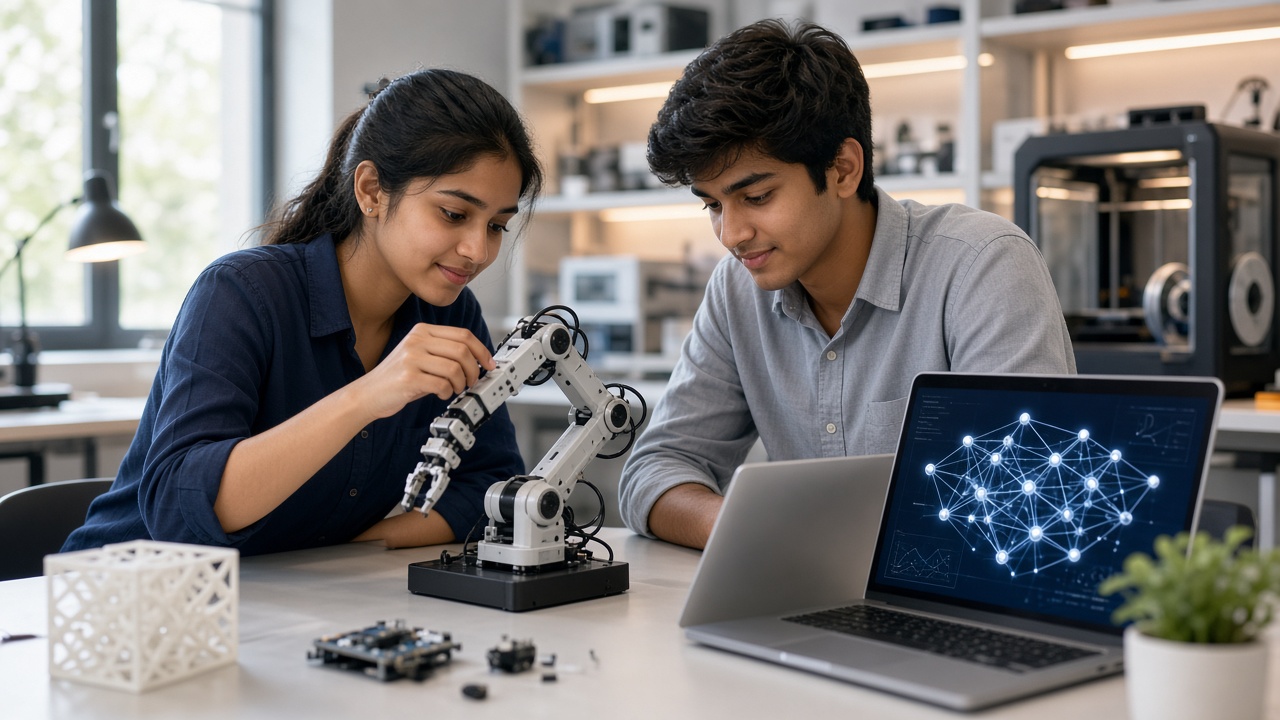
Many paths lead to AI and robotics—strong fundamentals and real projects matter most
A guide for Indian Class 9-12 students and parents on careers in AI and robotics—example roles, study paths after Class 12, stream choices, skills to build in school and how parents can help.
Introduction
"What should I study after Class 12 if I like AI and robots?" It is one of the most common questions students and parents ask us. The good news is that there is no single correct path. AI and robotics draw on computer science, electronics, mechanical engineering, mathematics and even design and ethics, so several routes can lead to this field.
This guide is for Class 9 to 12 students in India and their parents. It explains what careers in AI and robotics actually look like, the study options after Class 12, how stream choices affect them, and the skills worth building while still in school.
What AI and robotics careers look like
Machine learning engineer. Builds and improves systems that learn from data, such as recommendation engines, speech recognition or fraud detection. Strong programming and maths are central.
Data analyst or data scientist. Cleans, explores and interprets data to help organisations make decisions. Statistics, spreadsheets, Python and clear communication matter here.
Robotics engineer. Designs, builds and programs robots for factories, warehouses, hospitals, farms or research labs, combining mechanics, electronics and software.
Automation or mechatronics technician. Installs, maintains and troubleshoots automated machines and production lines. This is a hands-on role, often reachable through diploma routes.
Embedded systems engineer. Writes software for microcontrollers inside devices like smart appliances, vehicles and medical equipment.
Computer vision engineer. Teaches machines to understand images and video, used in quality inspection, traffic systems and self-driving research.
AI product and ethics roles. Product managers, researchers and policy specialists decide what AI tools should do, check them for fairness and safety, and explain them to users. Drone technology is another related area; we cover it in our separate guide to drone careers.
Study paths after Class 12
B.Tech or B.E. Common branches include Computer Science and Engineering, Artificial Intelligence and Data Science, Electronics and Communication Engineering, and Mechanical, Mechatronics or Robotics Engineering. CSE and AI and DS lean towards software and machine learning, ECE towards electronics and embedded systems, and mechanical or mechatronics towards physical robots and automation.
B.Sc. Degrees in Computer Science, Data Science, Mathematics or Statistics build strong foundations. Many students later move into data and AI roles or pursue a master's degree for deeper specialisation.
BCA. A Bachelor of Computer Applications focuses on programming and software development and can lead to an MCA or industry roles.
Diplomas and polytechnic courses. Diplomas in electronics, mechanical, mechatronics or computer engineering offer practical, hands-on training. Some students enter technician roles directly, while others later join engineering degrees through lateral entry where available.
Stream and subject choices
For most engineering programs, Physics, Chemistry and Mathematics (PCM) in Class 11 and 12 is the standard requirement, and mathematics is especially important. B.Sc. programs in data science, statistics or maths usually expect mathematics too. BCA and some other courses may accept students from different streams, often with mathematics as a preferred or required subject.
Eligibility rules, minimum marks and entrance exams differ by institution, state and year. Admissions may run through exams such as JEE Main, state entrance tests, CUET or a university's own process. Always check the official website or prospectus of each college and exam before deciding, rather than relying on hearsay.
Skills to build while in school
Mathematics. Algebra, functions, probability, statistics and later calculus form the backbone of AI and robotics. Focus on understanding, not just scoring.
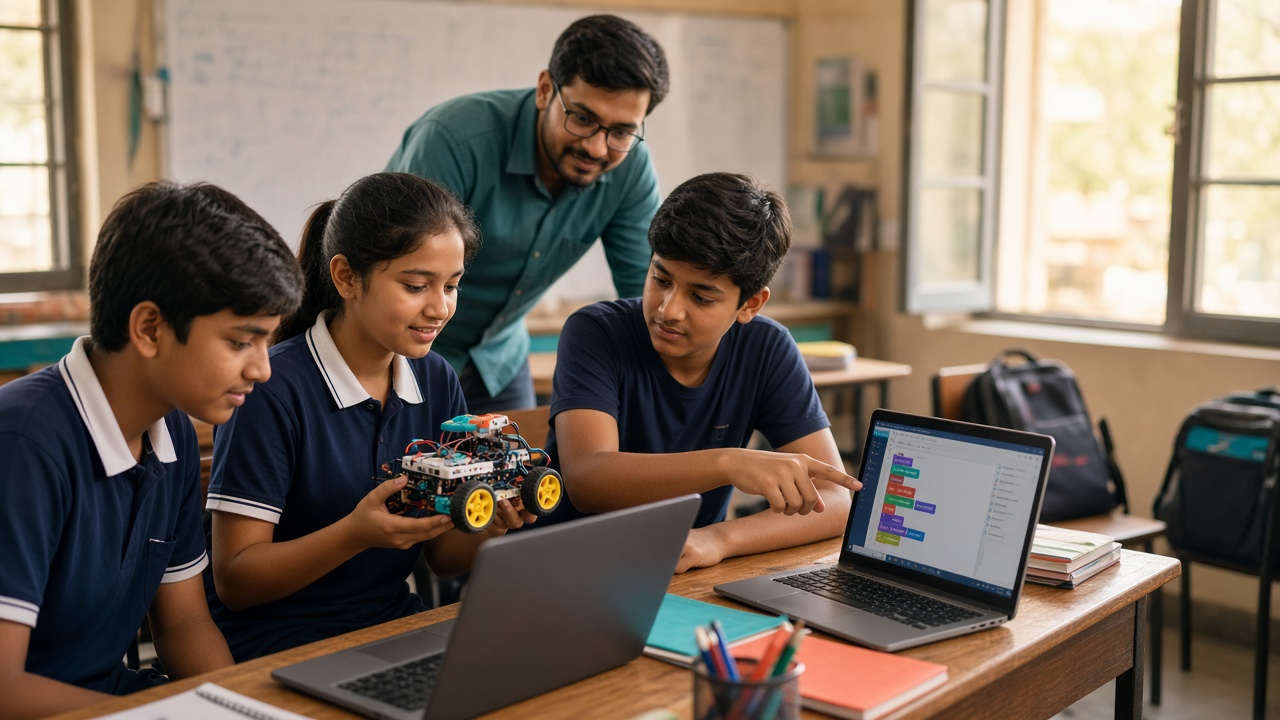
Programming in Python. Python is beginner-friendly and widely used in AI and data work. Start with simple programs, then try small data or automation projects.
Electronics and Arduino. Working with sensors, motors and microcontrollers teaches how software controls the physical world.
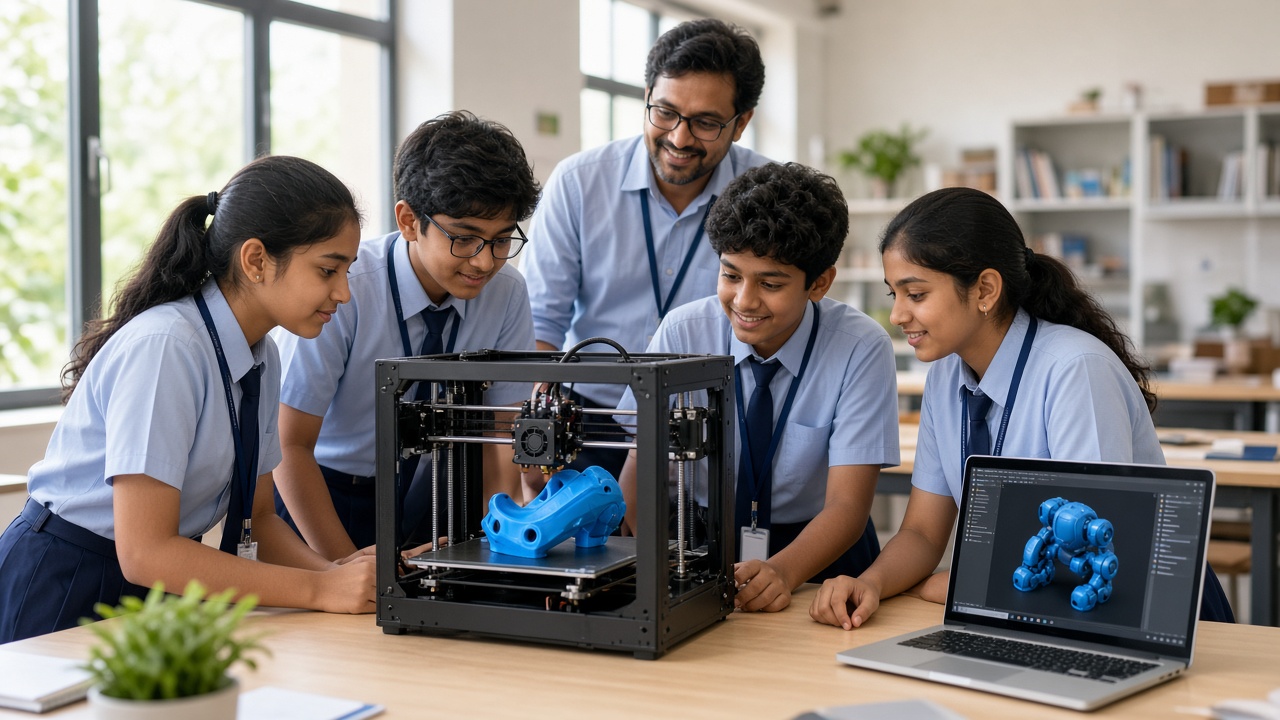
Projects and a portfolio. A line-following robot, a plant watering system or a simple image classifier shows real ability. Keep photos, code and short write-ups in one place.
Competitions and clubs. Robotics competitions, hackathons and science exhibitions build teamwork and problem solving under deadlines.
Communication. Explaining your project clearly, writing documentation and presenting to an audience are valued in every technical role.
How parents can help
Encourage curiosity over marks alone. Ask your child to show you what they built and how it works. Provide regular, supervised access to a computer and, if possible, a basic electronics kit. Help them find a good club, workshop or mentor, and attend college open days or online information sessions together. Most of all, let your child explore before choosing, and respect interests that may differ from popular choices.
A realistic note
Job titles and demand in technology change quickly. Some roles that are popular today may look different in a few years, and new ones will appear. Students who understand fundamentals such as maths, logic, programming and how systems work can adapt as tools change. Choose a path that builds strong basics and that genuinely interests you.
Frequently asked questions
Q: Do I need PCM for a career in AI and robotics? A: For most engineering degrees, yes, PCM is expected. Some B.Sc., BCA and data-focused courses accept other combinations, often requiring maths. Check each institution's official criteria.
Q: Is it too late to start in Class 11? A: No. Many people start coding and electronics in Class 11, 12 or even college. Consistent practice and small projects matter more than an early start.
Q: Can commerce or arts students work in AI? A: Yes, in several roles. Data analysis, AI product management, policy, ethics, design and business roles welcome diverse backgrounds, though building maths and data skills helps.
Q: Are expensive coaching classes necessary? A: Not necessarily. Coaching may help some students prepare for competitive exams, but self-study, school support, free resources and hands-on projects are valuable too. Decide based on your child's needs, not pressure.
Start building future-ready skills with SheepByte
SheepByte is an AI and robotics education company based in Udaipur, Rajasthan. Through our AI Learning, Coding Bootcamp, Drone Technology, Innovation Club, Robotics Lab and STEM Integration programs, we help students explore these fields with hands-on projects long before they choose a college course. We run workshops in Jaipur, Delhi and online, and help schools set up robotics labs.
Want your students to discover whether AI or robotics is right for them? Email support@sheepbyte.com or visit sheepbyte.com to plan a workshop or program.