Match the activity to your child, not the calendar
There is no single best age to begin coding and robotics, only the right starting point for each stage. Here is what to try from ages 5 to 17.
Introduction
"My daughter is seven. Is she too young for coding?" "My son is fifteen. Is it too late?" Parents ask us versions of these questions all the time. The honest answer is that there is no single magic age. There is, however, a right starting point for each stage of childhood. This guide explains what children can usually handle at each age, so you can choose activities that feel fun rather than frustrating.
Remember that every child develops differently. Treat the age bands below as friendly guidelines, not rules.
Is there a "best" age?
Research on child development generally shows that children learn best when activities match their reading ability, attention span, and fine motor skills. Coding and robotics need all three in different amounts. A five-year-old can follow a sequence of steps ("go forward, turn, go forward"), but may not be ready to type syntax. A twelve-year-old can handle that, and more.
So instead of asking "when should my child start?", ask "what should my child start with?".
Ages 5 to 10: from play to block coding
Ages 5 to 7: Play-based thinking. At this stage, the goal is not programming languages. It is sequencing, patterns, and cause and effect. Unplugged games such as giving a family member step-by-step directions to find a hidden toy; Floor robots or simple programmable toys that move with button presses; Building with blocks and simple snap-together circuits; Picture-based puzzles that teach "if this, then that". Keep sessions short, around 20 to 30 minutes, and let curiosity lead. If a child enjoys it, wonderful. If not, try again in a few months.
Ages 8 to 10: Block-based coding and first builds. Children in this range can read and follow instructions, which opens the door to visual programming tools where code is built by snapping blocks together. They can: Make animations and simple games; Understand loops, conditions, and variables in a visual form; Build small robots using kits with motors and basic sensors; Work in pairs and share a task. This is often the sweet spot to begin regular classes. The focus should be on making things that work and are fun, such as a robot that avoids obstacles or a game with a score.
Ages 11 to 17: text coding, electronics, and depth
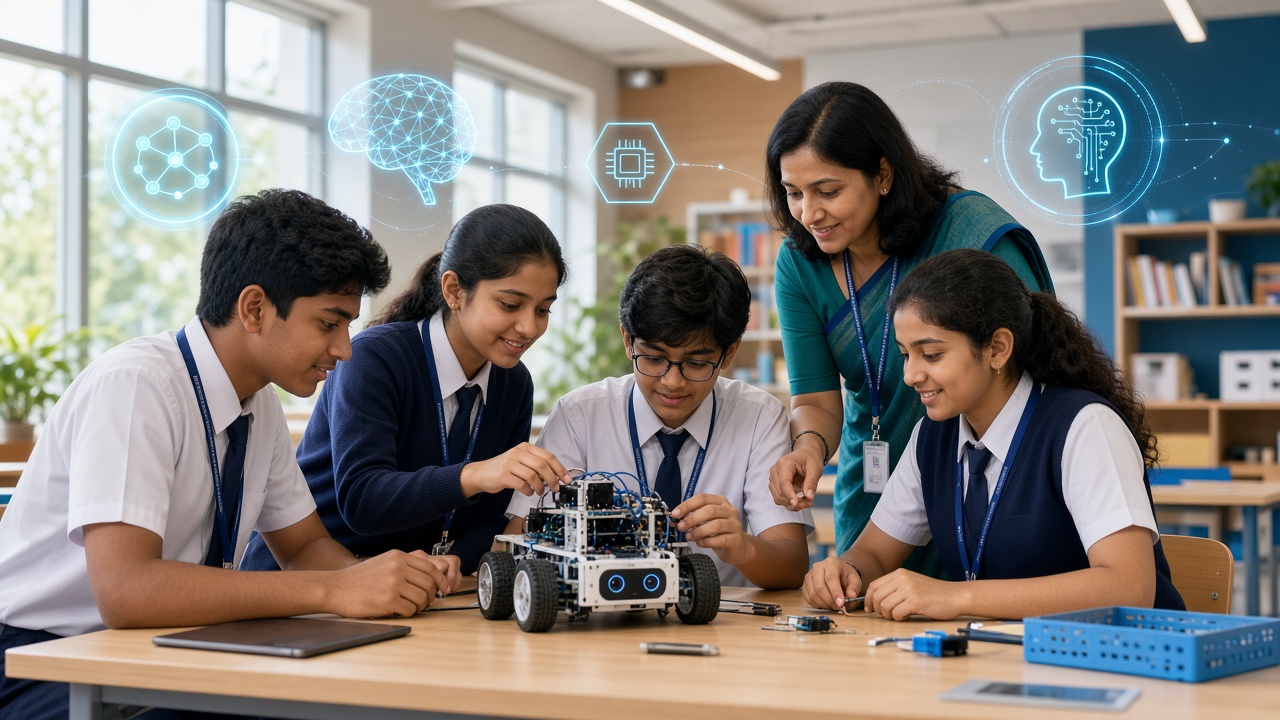
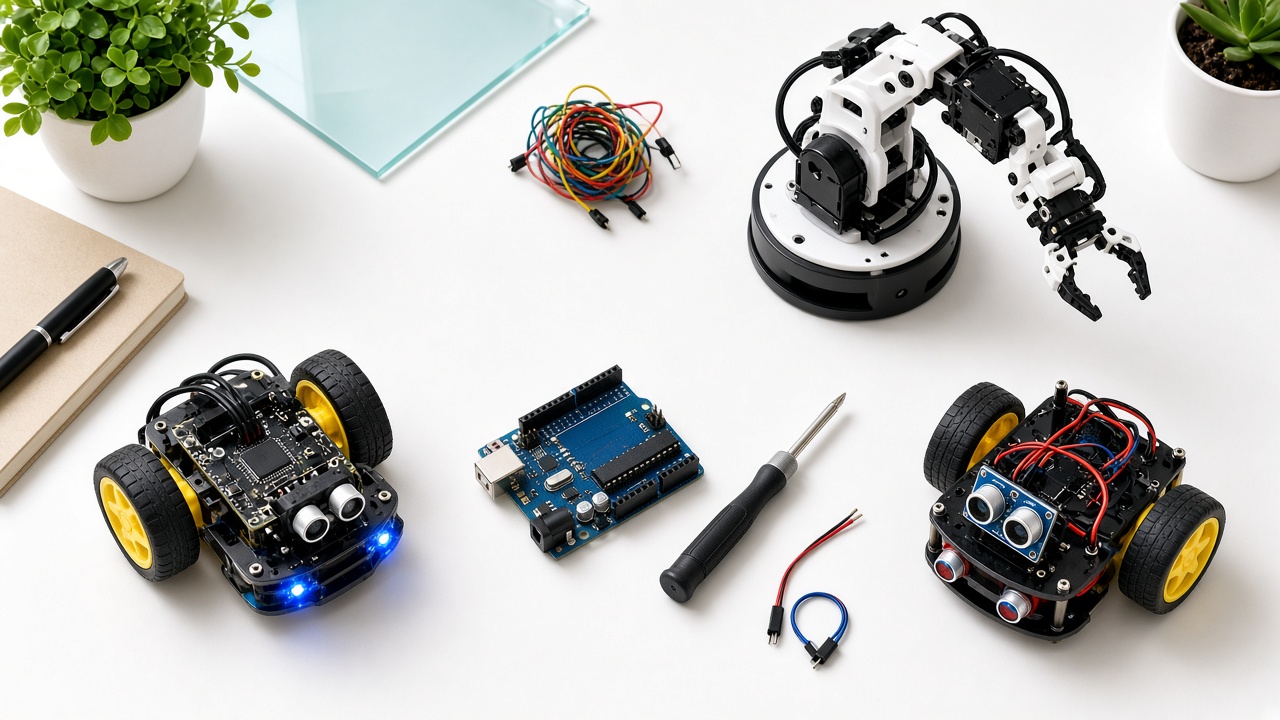
Ages 11 to 13: Text-based coding and electronics. By middle school, most students can handle typing and logical structure. This is a good time to introduce: Python for beginner programming, simple games, and early data work; Arduino or similar microcontrollers for connecting code to the physical world; Sensors such as ultrasonic distance, light, and temperature; Basic circuit ideas like voltage, current, and resistance, with guidance. Students at this age enjoy projects with a real purpose: an automatic plant-watering system, a smart dustbin, or a simple weather station. If you are weighing options, our guide to Python versus Arduino for beginners can help you choose.
Ages 14 to 17: Depth, specialisation, and portfolios. Older students can explore deeper topics, and they have a practical reason to do so: choosing subjects, preparing for competitions, and thinking about college and careers. Possible directions include: Python projects with data analysis and an introduction to machine learning; Advanced robotics with multiple sensors, motor control, and mechanical design; Drone technology, including flight principles and responsible operation within Indian rules; Building a project portfolio for science fairs, hackathons, and robotics competitions.
Is it too late at 15 or 16. Not at all. Teenagers pick up concepts quickly because they can reason abstractly and read documentation. They may start with simpler projects than they expect, but they often catch up in months, not years. What matters is consistent practice and a project they care about.
Is your child ready? Choosing a class and helping at home
Signs your child is ready. Instead of watching the calendar, watch your child. Readiness often shows up as: Asking how things work: toys, phones, remote controls; Enjoying puzzles, building sets, or strategy games; Being able to focus on one task for 20 to 30 minutes; Showing interest in making rather than just using. If your child shows none of these yet, that is fine. Exposure through casual play can come first.
How to choose a class or programme. 1. Match the activity to the age. Be wary of any programme that teaches the same content to a seven-year-old and a fifteen-year-old. 2. Check the hands-on ratio. Children should build and experiment in most of every session. 3. Ask about group size. Smaller groups mean more attention for each child. 4. Look for progression. A good programme has a clear path from beginner to advanced. 5. Ask to see student work. Demos, projects, or a trial class tell you far more than a brochure.
Tips for parents at home. Celebrate effort and experiments, not just working results; Let children debug their own mistakes before stepping in; Ask "What happened? What could you try next?" instead of giving answers; Limit screen time by balancing coding with building and outdoor play; Learn alongside your child. You do not need to be technical to be encouraging.
Frequently asked questions
Q: Can a five-year-old learn coding? A: Yes, in a playful form. Young children can learn sequencing and logic through games, stories, and simple programmable toys, without a keyboard. The aim is building thinking habits, not writing code.
Q: What should an 8-year-old start with? A: Block-based coding and a beginner robotics kit are a comfortable start. Visual tools let children focus on logic without worrying about spelling and punctuation, and a small robot makes the results visible.
Q: Does my child need to be good at maths first? A: No. Basic number sense helps, but coding and robotics also build maths skills through real use. Many children understand angles, speed, and coordinates better after programming a robot than from a worksheet.
Start at the right level with SheepByte
SheepByte is an AI and robotics education company based in Udaipur, Rajasthan. Our Coding Bootcamp, AI Learning, Robotics Lab, Drone Technology, Innovation Club, and STEM Integration programs are designed to help students begin at a level that suits them and grow step by step. We also run workshops in Jaipur, Delhi, and online.
Not sure where your child should begin? Email support@sheepbyte.com or visit sheepbyte.com, and we will help you find the right starting point.