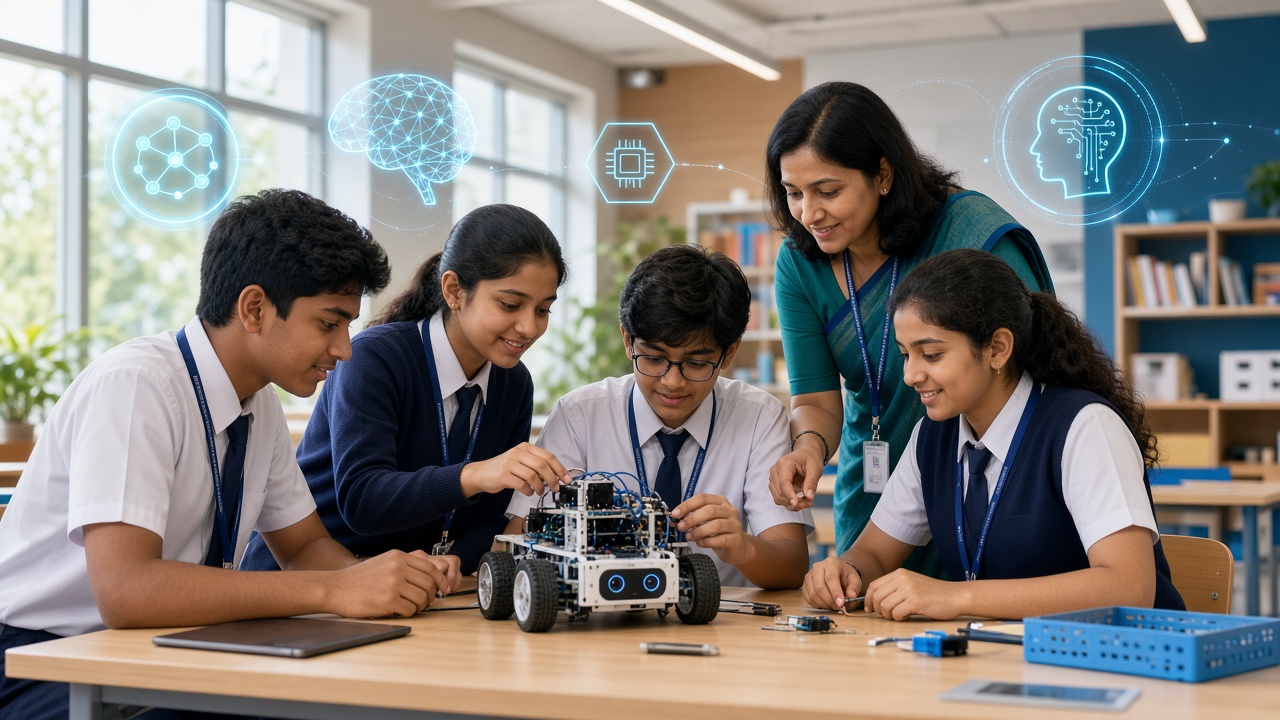
What every parent and principal should know before the next academic year
AI and robotics help students build problem-solving, teamwork, and digital awareness. This guide shows parents and principals why they belong in school and how to begin.
Introduction
Walk into any Indian household today and you will find artificial intelligence at work: the phone that suggests the next word, the video app that knows what your child wants to watch, the maps app that reroutes around traffic. Yet in many classrooms, children still learn about technology only from a textbook chapter. If you are a parent or a school principal wondering whether AI and robotics really belong in school education, this guide gives you a clear, practical answer.
Why this conversation matters now
Today's students will start their careers in a world where working alongside intelligent software and machines is normal. That does not mean every child will become a robotics engineer. It means every child benefits from understanding how these systems work, what they can do, and where they go wrong.
India's own policy direction points the same way. The National Education Policy (NEP) 2020 stresses experiential learning, computational thinking, and exposure to coding and emerging technologies. CBSE offers Artificial Intelligence as a subject at the secondary level, and the government's Atal Tinkering Labs initiative has encouraged schools to create hands-on innovation spaces. Schools that bring AI and robotics in are moving with this direction, not against it.
What children actually gain
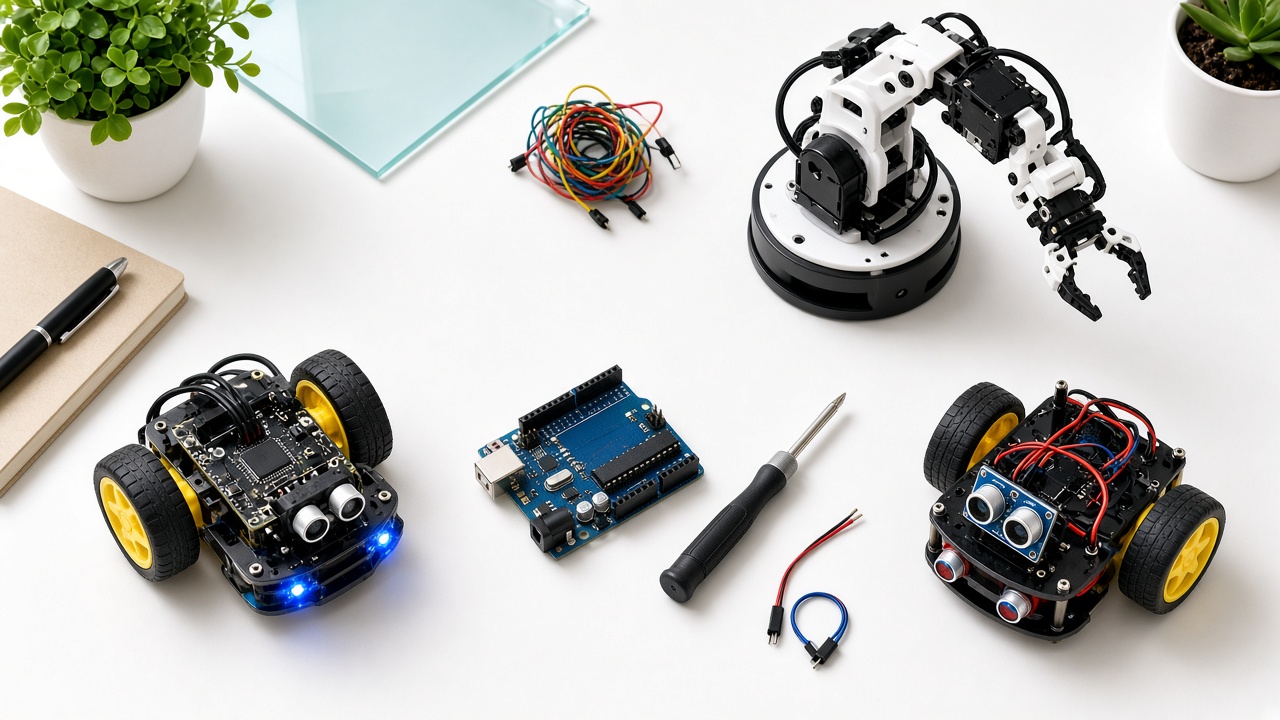
1. Problem-solving that sticks. When a student builds a line-following robot and it veers off the track, no one hands over the answer. The student has to observe, guess, test, and fix. That loop of "try, fail, improve" is the heart of engineering, and it carries over to maths, science, and everyday decisions.
2. Subjects that finally connect. Many children ask, "Where will I ever use this?" Robotics gives a direct answer. Maths becomes angles and distances for a robot arm. Physics becomes motors, torque, and sensors. English and communication show up when teams explain and present their projects. This is the idea behind STEM integration: subjects work together on one real problem instead of sitting in separate boxes.
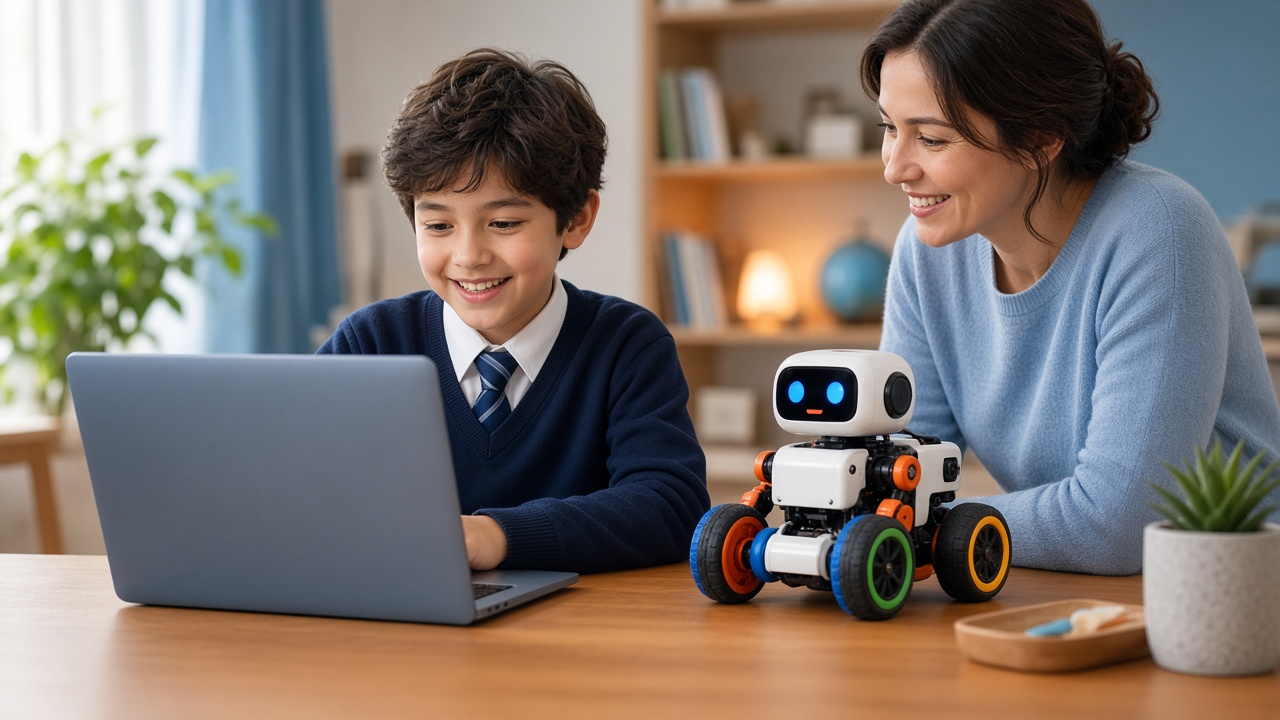
3. Confidence and teamwork. Building something that moves, senses, or responds is deeply satisfying for a child. Team projects also teach sharing tasks, listening to ideas, and handling disagreements, which are skills every employer and every family values.
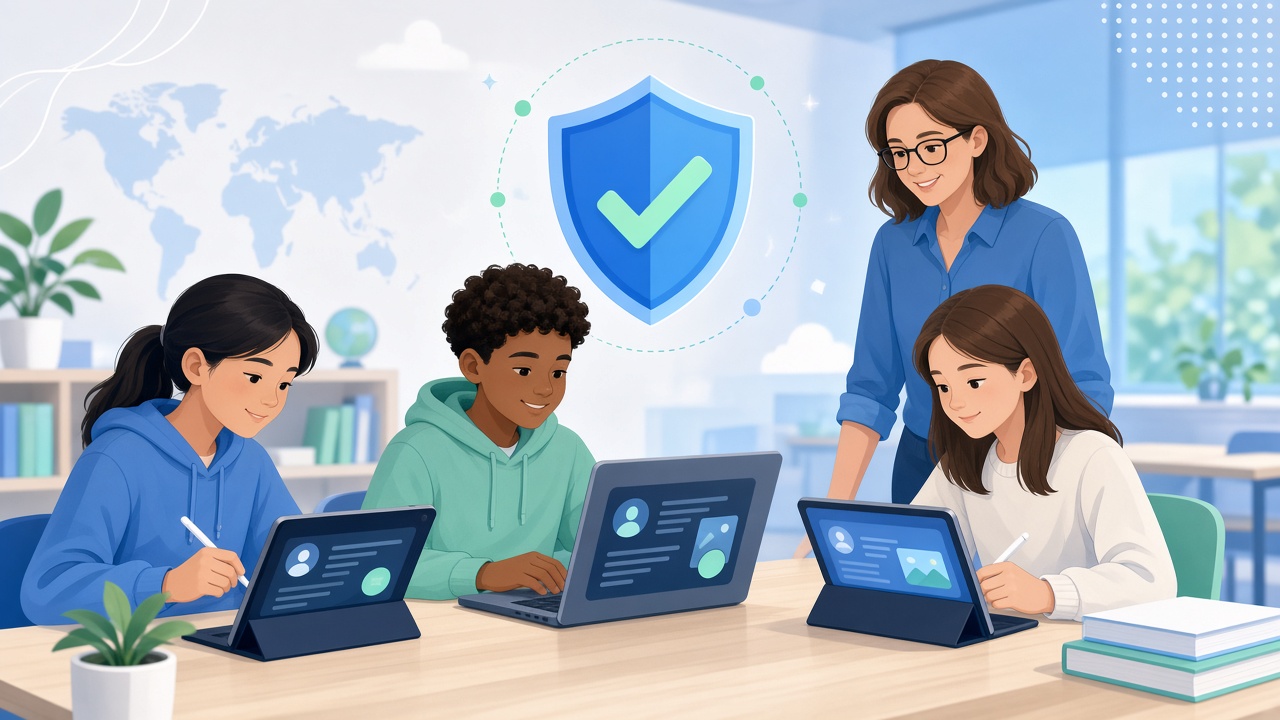
4. Digital awareness and safe use of AI. Children already use AI-powered apps. Learning how AI works, including that it can be wrong, biased, or misused, helps them become thoughtful users rather than passive ones. A student who has trained a tiny image classifier and watched it make silly mistakes will think twice before trusting every AI answer.
5. Early career exploration. Fields like data science, automation, drones, embedded systems, and healthcare technology all grow from the basics students can touch in a school lab. Early exposure helps children discover what they enjoy long before they must choose a stream.
What good AI and robotics education looks like
Not every programme delivers these benefits. Look for these signs:
- Hands-on first. Students spend most of their time building and testing, not just watching slides.
- Age-appropriate steps. Younger children begin with block-based coding and simple circuits; older students move to Python, sensors, and basic machine learning.
- Projects with a purpose. A robot that waters a plant or a model that sorts waste teaches more than a kit assembled from a fixed manual.
- Trained mentors. Teachers or facilitators who can explain concepts in simple language and handle mistakes patiently.
- Clear learning outcomes. You should be able to ask, "What will my child be able to do after this term?" and get a straight answer.
Common worries, honestly answered
"Will it distract from board exams?" Done well, it supports them. Robotics practises the same reasoning that maths and science exams test, and it usually runs as a weekly session or club, not a replacement for core subjects.
"Is it too expensive for our school?" Costs vary widely. A school can start with a small set of kits and a single classroom corner, then grow. The key is to start with a plan rather than buying equipment first.
"Do our teachers need to be engineers?" No. With good training and ready-to-use lesson plans, subject teachers can facilitate many activities, especially in the beginning.
"Will AI replace creative thinking?" The opposite is true when AI is taught well. Students learn that tools are only as good as the questions and judgement behind them.
How schools can begin
1. Start with a pilot. Choose one or two grade levels and run a term-long programme or a short workshop. 2. Combine clubs and curriculum. An Innovation Club can run alongside regular timetable sessions to build excitement. 3. Invest in teachers. Even a few days of training makes a big difference to how confident staff feel. 4. Plan the space. A dedicated corner or room with storage, power points, and workbenches helps equipment last. 5. Show the work. Exhibitions and demo days let parents see what children have built, which builds community support.
Frequently asked questions
Q: Is AI and robotics too difficult for school students? A: No, when it is taught in steps. Young learners start with visual, block-based tools and simple circuits. As they grow, they move to text-based coding and more advanced projects. Difficulty depends far more on teaching style than on the subject.
Q: Will learning robotics help my child in academics? A: It can strengthen skills that academics rely on: logical reasoning, measurement, patience, and the habit of testing ideas. We cannot promise a particular marks improvement, but many parents and teachers notice better engagement and curiosity.
Q: How can a school start without a big budget? A: Begin small: a handful of beginner kits, a trained facilitator, and a weekly club session. Expand once students and parents see the results. A well-planned pilot is better than an expensive lab that sits unused.
Bring AI and robotics to your students with SheepByte
SheepByte is an AI and robotics education company based in Udaipur, Rajasthan, working with schools and students through AI Learning, Coding Bootcamp, Drone Technology, Innovation Club, Robotics Lab, and STEM Integration programs. We run workshops in Jaipur, Delhi, and online, and we help schools set up robotics labs from planning to launch.
Ready to explore what fits your school or your child? Write to us at support@sheepbyte.com or visit sheepbyte.com to start the conversation.